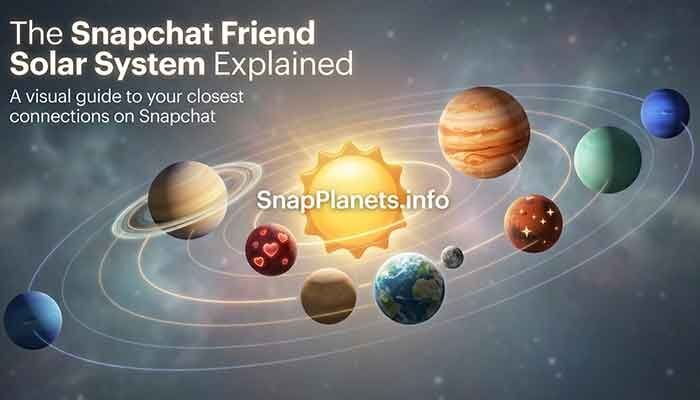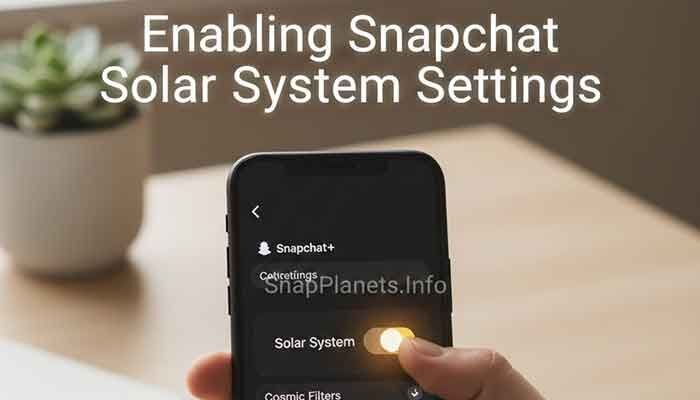
Snapchat’s Friend Solar System is a Snapchat+ feature that represents your position in another person’s Best Friends list with a planet. If the badge is missing, it does not automatically mean the feature was removed or that your friendship changed. Check your subscription, the Solar System setting, and whether the relevant profile displays the feature. Snapchat can change its interface, so menu names and availability may vary by app version or account.
This guide explains what opt-in means, how to check the setting, and what the planet ranking can—and cannot—tell you. Snapchat has not publicly documented every detail of its ranking formula, nor is there reliable evidence for claims that a specific 2024–2026 change was introduced because of a quantified mental-health finding. Treat planet badges as a limited app feature, not a complete measure of a relationship.
My Personal Experience with the Solar System Update
A missing planet badge can be confusing, especially if you were used to seeing one on a friend’s profile. However, a badge disappearing is not enough to conclude that someone has stopped interacting with you or that Snapchat has lowered your place for a specific reason. Settings, subscription access, eligibility, and interface changes are all worth checking before drawing conclusions.
Start by opening the friend’s profile and checking whether the Best Friends or Solar System badge is available. If the feature is enabled and the badge still does not appear, review Snapchat+ settings and update the app. The exact display can vary, and Snapchat does not promise that every profile will show a planet at all times.
For related steps, read our guide on how to turn off Snapchat Planets. If your planet is missing, the troubleshooting checklist in Snapchat Planets not showing is another useful place to start.
Why the Change? The Deep Dive into Snapchat Planets Opt-in
The key distinction is between a feature being available and a feature being enabled for a particular account. Friend Solar System is a Snapchat+ feature, and Snapchat has provided a setting that lets subscribers control whether the Solar System experience is shown. Avoid assuming that a missing badge proves the feature was universally removed or that a particular policy change occurred in a specific year.
The Anxiety Factor
Friend rankings can encourage comparison because they turn app interactions into a visible order. Seeing a lower planet may feel personal, but it is not a reliable verdict on the quality of a friendship. People use Snapchat for different reasons and at different times, and a ranking does not capture offline support, trust, or the full context of a relationship.
If checking planets repeatedly makes you anxious, consider turning the feature off or taking a break from checking it. You do not need to monitor a badge to prove that a friendship matters. This is a practical personal boundary, not a claim that Snapchat introduced opt-in specifically because of a particular study or statistic.
Privacy Changes and User Control
Opt-in controls give subscribers a choice about viewing the Solar System feature. They should not be confused with a promise that every part of Snapchat activity is private or invisible. For a clearer explanation of what other people may see, read who can see your Snapchat Planets.
Claims that a particular percentage of users were distressed, or that Snapchat changed the feature for one precise psychological reason, should not be repeated without a trustworthy source. Snapchat’s publicly available feature descriptions do not establish the unsupported statistic sometimes quoted in online articles. The dependable takeaway is that the setting offers user control; the company’s full internal reasoning is not publicly confirmed.
How the Planets Rank Your Friendships
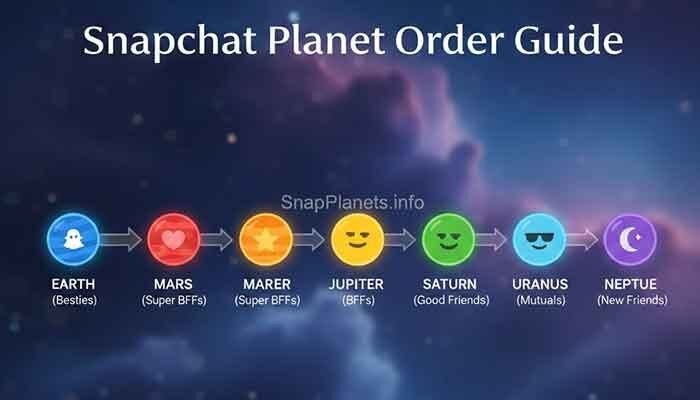
In Friend Solar System, the planets represent positions in a friend’s Best Friends list: Mercury is first, Venus second, Earth third, Mars fourth, Jupiter fifth, Saturn sixth, Uranus seventh, and Neptune eighth. The planet shown on a profile reflects your position in that person’s list, not necessarily their position in yours.
Snapchat does not publish a complete scoring formula, exact interaction points, or a guaranteed refresh schedule. It is therefore not accurate to promise that a certain number of Snaps, chats, or Story views will move someone to a specific planet. See our explanation of the Snapchat Solar System ranking algorithm for what is and is not confirmed.
How to Enable Planets Settings in 2026
If you have Snapchat+ and want to use Friend Solar System, check the feature controls in the Snapchat+ area of your profile. Menu labels and placement can change with app updates, so use the closest matching Solar System option if the exact wording differs.
- Open your Profile: Tap your Bitmoji or profile icon.
- Open Snapchat+: Select the Snapchat+ membership area if it appears.
- Find Friend Solar System: Look through the feature settings for the Solar System option.
- Check the toggle: Turn the feature on if you want to use it, or off if you prefer not to see it.
- Review a friend’s profile: Open the profile and check whether a Best Friends or planet badge is displayed. A planet is not guaranteed to appear on every profile.
If the option is missing, confirm that your Snapchat+ subscription is active, update Snapchat, close and reopen the app, and review the feature list again. The interface may differ by account or app version. Also check our Snapchat+ FAQ for subscription and feature basics.
The Controversy: Why It Stayed “Opt-In” Through 2026
Friend Solar System combines a playful visual feature with a ranking that some people may find uncomfortable. Keeping a setting available lets subscribers decide whether they want to use it. However, unless Snapchat provides a specific announcement, it is not possible to state with confidence that a particular controversy or mental-health study caused the setting design.
Planet positions can change as the Best Friends list changes, but Snapchat does not publicly guarantee a fixed update interval or disclose every factor in the ranking system. A movement from one planet to another does not come with a documented explanation of exactly which interaction caused it. Simply viewing a planet should not be treated as proof that your rank changed, and users should not rely on unverified claims about hidden scoring rules.
FAQ: Everything You’re Asking on Reddit
Q: Why can’t I see my planet even though I have Snapchat+?
A: Check that your Snapchat+ subscription is active and that Friend Solar System is enabled in the feature settings. Update the app and reopen the friend’s profile. If the badge is still missing, it may not be available for that profile or account; Snapchat does not guarantee a planet badge on every profile.
Q: Did Snapchat remove the planets feature in 2024?
A: Do not assume that a missing badge means the entire feature was removed. Friend Solar System remains a Snapchat+ feature, and the setting can affect whether it appears for you. For current availability, check Snapchat’s in-app Snapchat+ feature list and help information rather than relying on unsupported claims about a universal removal date.
Q: Can my friends see what planet I am in their solar system?
A: The planet shown when you inspect a friend’s profile represents your position in that friend’s Best Friends list. It does not mean Snapchat publishes a public leaderboard of everyone’s full rankings. What each person can see depends on the feature’s profile display and account access; do not assume they can view your entire Solar System list.
Q: Is the solar system update available for free users?
A: Friend Solar System is a Snapchat+ feature. Free users generally do not have access to this subscription perk unless Snapchat changes its availability or includes it in a promotion. Check the current Snapchat+ feature list for the latest terms in your region.
Q: Does being “Neptune” mean we aren’t friends?
A: No. Neptune represents the eighth position in the Friend Solar System, not a judgement about your real-life relationship. It only reflects a limited ranking within Snapchat’s feature. It cannot measure trust, closeness outside the app, or how much a person values you.
Martin’s Final Tip
Use Friend Solar System only if it adds fun or useful context to your Snapchat experience. A planet is an app-based ranking, not a complete measure of friendship. If the feature makes you compare yourself with others or feel pressured, turning it off is a reasonable choice.
Keep the ranking in perspective: people’s habits change, and the app does not explain every movement. Focus on direct communication and how people treat you beyond a badge. You can also read the difference between Snapchat Best Friends and Planets to understand what the two indicators do and do not show.