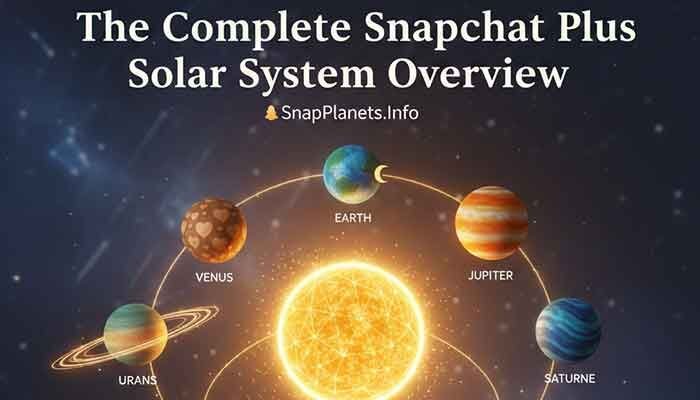
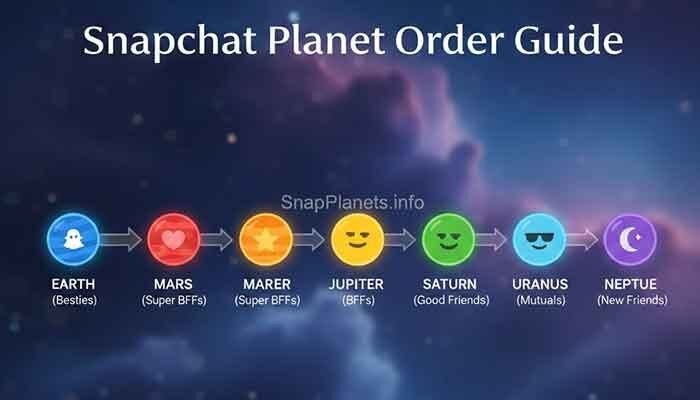
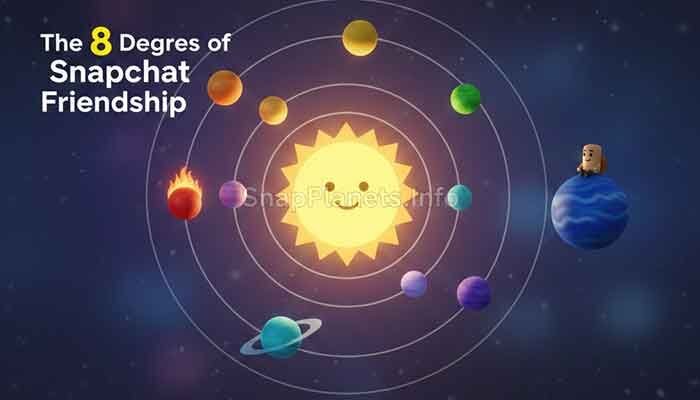
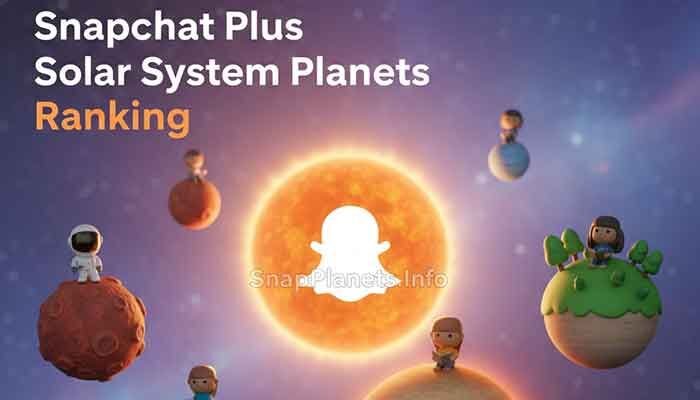
Snapchat Plus planet colors help users recognize the planets in Friend Solar System, a Snapchat+ feature that shows a relative Best Friends position. The most reliable way to identify a rank is to learn the planet order, rather than relying only on small colours or decorative hearts.
This guide covers all eight positions, explains what the feature does and does not tell you, and offers checks for missing planet badges. Planet positions are app indicators, not a complete measure of a friendship.
My Personal Experience with Snapchat Plus Planet Colors
Planet artwork can be difficult to identify on a small screen, especially when colours and decorations look similar. Instead of guessing what a planet says about a relationship, use its position in the Friend Solar System and remember that Snapchat does not publish a full ranking formula.
The visual design may vary with app updates or display conditions. If a badge looks different from a guide image, check the current Snapchat interface rather than assuming that a colour change proves your ranking changed.
Decoding the Inner Circle: Mercury, Venus, and Earth
The first three positions in the standard Friend Solar System are Mercury (#1), Venus (#2), and Earth (#3). The planet shows your relative position in the other person’s system when the feature is available and enabled. It does not prove that you are their closest friend in every part of life.
Mercury: The #1 Spot
Mercury represents the #1 position. The artwork is commonly shown as a small warm-coloured planet with red heart decorations, though visual details can change. The dependable fact is the rank: Mercury is first in the sequence.
- Position: #1
- How to identify it: Look for the Mercury planet artwork and confirm its place in the planet sequence.
- What it means: You occupy the first position in that friend’s Solar System, not a guaranteed real-world relationship status.
Venus: The Close Second
Venus represents position #2. It is often illustrated in tan or light brown tones with colourful decorations. Do not rely on colour alone, because artwork can be small and may be updated.
- Position: #2
- How to identify it: Compare the icon with Snapchat’s current Friend Solar System display.
- What it means: You are second in that friend’s displayed ranking; it does not tell the whole story of your friendship.
Earth: The Solid Third
Earth represents position #3 and is usually recognizable by its blue-and-green globe appearance. Decorative elements may appear around it, but they should not be used to infer an exact interaction score or relationship milestone.
- Position: #3
- How to identify it: Look for the familiar blue-and-green planet artwork.
- What it means: Third in the relevant friend’s Solar System.
The Mid-Range Connections: Mars to Saturn
Mars through Saturn occupy positions #4, #5, and #6. These are still positions in the Best Friends ranking. Labels such as “regular friend” or “distant friend” are interpretations, not official Snapchat definitions of the people behind each badge.
Mars: The Fourth Position
Mars is the fourth planet in the sequence and is often illustrated in red or orange tones. Because Mars and Mercury can both look warm-coloured, use the actual badge and sequence rather than making a decision from colour alone.
- Position: #4
- Artwork: Commonly red or orange, with decorative details that may vary.
- Meaning: Fourth in that friend’s system.
Jupiter: The Fifth Friend
Jupiter represents position #5. Its artwork is often orange or brown with banded or striped details. The exact decorative appearance should not be treated as a separate relationship score.
- Position: #5
- Artwork: Often shown as a large striped planet.
- Meaning: Fifth in the Friend Solar System being viewed.
Saturn: The Sixth Friend
Saturn is position #6 and is usually easiest to recognize by its prominent rings. It is often displayed in yellow-orange tones. For a fuller explanation, see our guide to Saturn on Snapchat.
- Position: #6
- Artwork: A ringed planet, commonly in warm colours.
- Meaning: Sixth in that person’s displayed ranking.
The “Cold” Zone: Uranus and Neptune
Uranus and Neptune are positions #7 and #8. They are the last two planets in the standard sequence. Their position alone does not establish that someone is unimportant to you or that the friendship is weak.
Uranus: The Seventh Spot
Uranus represents position #7 and is commonly depicted in greenish or turquoise tones. Decorative swirls or stars may be part of the artwork, but these details are not a published ranking formula.
- Position: #7
- Artwork: Often green or turquoise.
- Meaning: Seventh in the friend’s Solar System.
Neptune: The Eighth Spot
Neptune is position #8 and is commonly illustrated in blue tones. It is the final planet in the standard Friend Solar System order. It indicates a relative position in the feature, not a judgement about how much a person cares.
- Position: #8
- Artwork: Often blue, with decorative details that may vary.
- Meaning: Eighth in the displayed ranking.
Quick Reference Table: Snapchat Plus Planet Colors
| Planet | Position | Common visual clue |
|---|---|---|
| Mercury | #1 | Warm tones; heart decorations may appear |
| Venus | #2 | Often tan or light brown |
| Earth | #3 | Blue and green globe |
| Mars | #4 | Often red or orange |
| Jupiter | #5 | Often orange or brown with bands |
| Saturn | #6 | Prominent rings |
| Uranus | #7 | Often green or turquoise |
| Neptune | #8 | Often blue |
These are general visual clues, not a guarantee that every version of the app uses identical artwork. The numbered order is the more reliable way to understand the feature.
Frequently Asked Questions
Why can’t I see the planet badge on my friend’s profile?
Friend Solar System is a Snapchat+ feature. Check that your subscription is active and that the feature is enabled in Snapchat+ settings. It is off by default for first-time Snapchat+ subscribers and can be toggled. Availability or app-version differences can also affect what you see.
Does the order change automatically?
The displayed positions reflect relative Best Friends ranking, but Snapchat does not publish the complete scoring formula or a guaranteed refresh interval. A change in your interactions does not guarantee that your planet will move by a particular date.
Can my friend see my planet in their solar system?
Each person’s Solar System reflects their own Best Friends ranking, so your position in their system may differ from their position in yours. Visibility depends on Snapchat+ feature availability and settings; do not assume the two rankings are identical.
Is Pluto included in the Snapchat Plus planets?
The standard Friend Solar System uses eight planets, from Mercury to Neptune. Pluto is not part of this standard eight-position sequence.
Martin’s Final Tip
Use the planet order to identify a badge, but do not treat the ranking as a complete measure of friendship. Snapchat does not reveal an exact scoring formula, and a planet position cannot capture every part of a real relationship.
Explore our related guides to Venus on Snapchat, Mars on Snapchat, Saturn on Snapchat, and Snapchat planet hearts meaning for more detail on individual planets and related symbols.
Pingback: New Snapchat Planets: Will Snap Add Pluto or More Orbits? - Snapchat Planets Updates